|
|
|
|
|
 |
|
|
|
|
|
|
|
|
|
NJG1 Founded :
|
NJG1
NJG1 Artwork Collection |
  Clipped Signature - Wolfgang Falck. |   Clipped Signature - Fritz Rumpelhardt. |   Clipped Signature - Otto Fries. |
  Into The Cloak of Darkness by Nicolas Trudgian | 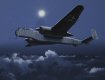  Menace - Heinkel 219A-7/R2 by Ivan Berryman. |
| NJG1 Aircraft details |
 Me110 Manufacturer : Messerschmitt | Me110 The Bf-110 grew out of Herman Gorings specifications for a multipurpose aircraft capable of penetrating deep into enemy airspace to clear the sky of enemy fighters in advance of German bomber formations. The aircraft would also be utilized as a long range interceptor, and as a ground support and ground attack bomber. The Bf-110 prototype first flew in 1936. The prototype was under powered with its Daimier Benz DB 600A engines. Several months passed before a go ahead was given for large scale production which commenced in 1938. Utilizing improved DB 601 engines, the early production 110s were as fast as any single engine fighter at that time, and had superior fire power. Their biggest apparent weakness was in the areas of armor protection for the crew, and in terms of maneuverability when compared to single seat fighters. The 110 was produced in large numbers and in many different variants. The 110D was the long range model. An additional belly tank was fitted to that aircraft, with several later variants having the more traditional drop tanks. The first serious test for the Bf-110 came during the Battle of Britain. About 300 Bf-110s were involved. They became easy prey for Hurricane and Spitfire pilots, and Bf-109s were often required to assist the 110s in their own defense. On August 15, 1940, which became known as Black Tuesday, the Bf-110s were ravaged by the RAF, and for the month over 100 aircraft were lost. On the Eastern Front the Bf-110 performed admirably in the early stages of Operation Barbarossa. With the Soviet Air Force weakened in the first several weeks of the attack, 110s were effectively utilized in a ground attack role. Ultimately, the Luftwaffe re-equipped a significant number of its 110s as night fighters. The aircraft performed well in this role because it was a good gun platform with sufficient speed to overtake the RAF night bombers. Such night missions were typically carried out with no Allied fighter escort, so the 110 night fighters would not have to engage or elude Allied fighters in this role. |
| NJG1 Pilot and aircrew signature details |
 Oberleutnant Rolf Ebhardt Our estimated value of this signature : £45 Died : 2013 | Oberleutnant Rolf Ebhardt Joined Luftwaffe in December 1941 and began flight training at Dresden in February 1942. Joined NJG 101 in December 1942 (night training unit) where he completed his specialist training. (In training flew Ju52, He111, Ju88, Do217 and Me109) As a newly promoted Leutnant he joined III/NJG 1 in Holland on 1st November 1943 and achieved his first night time victory on 26 April 1944. By the time of his eighth and last victory on 5 January 1945 he had flown 82 operations and been awarded the Iron Cross First and Second Class. All his ops were flown in Me110s. He died in March 2013. |
|
Contact Details |
|
Sign Up To Our Newsletter!
This website is owned by Cranston Fine Arts. Torwood House, Torwoodhill Road, Rhu, Helensburgh, Scotland, G848LE Contact: Tel: (+44) (0) 1436 820269. Email: cranstonorders -at- outlook.com
|
|
|


