|
|
|
|
|
 |
|
|
|
|
|
|
|
|
|
No.41 Sqn RAF Founded : 15th April 1916
Seek and destroy Founded in 1916, 41 Squadron was disbanded at the end of World War One, but reformed on 1st April 1923. |
No.41 Sqn RAF
  Total Commitment by Ivan Berryman. (PC) | 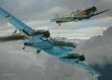  Tribute to Pilot Officer Ted Shipman by Ivan Berryman. (PC) |   Arctic Warrior by Michael Rondot. |   Snowcat by Robert Tomlin. |
No.41 Sqn RAF Artwork Collection |
  41 Squadron Spitfires by Ivan Berryman. |   Sqn Ldr Maurice Brown - No.41 Sqn by Ivan Berryman. |   41 Sqn Scramble by Ivan Berryman. |
  Dornier's Demise by Ivan Berryman. |   Into the Schwarm by Ivan Berryman. |   Tribute to Pilot Officer Ted Shipman by Ivan Berryman. |
  Clipped Signature - Cyril Bamberger. |   Clipped Signature - Robert Beardsley. |   Clipped Signature - Edward Shipman. |
  Clipped Signature - Jack Steere. |   Total Commitment by Ivan Berryman. |   Victory Over the Rhine by Nicolas Trudgian. |
  Spitfires Over St Michaels Mount by Robert Taylor. | Snowcat by Robert Tomlin. | Arctic Warrior by Michael Rondot. |
  Coltishall - End of the Line by Michael Rondot. |   Hawker Fury IIs of 41 Sqn RAF by Keith Woodcock. |
| Aces for : No.41 Sqn RAF | ||
| A list of all Aces from our database who are known to have flown with this squadron. A profile page is available by clicking the pilots name. | ||
| Name | Victories | Info |
| Eric Stanley Lock | 26.50 | |
| Brian John George Carbury | 15.50 | |
| John Terrance Webster | 15.00 | |
| Tom Neil | 14.00 | The signature of Tom Neil features on some of our artwork - click here to see what is available. |
| Tony Gaze | 12.50 | The signature of Tony Gaze features on some of our artwork - click here to see what is available. |
| George Harman Ben Bennions | 11.00 | The signature of George Harman Ben Bennions features on some of our artwork - click here to see what is available. |
| No.41 Sqn RAF Aircraft details |
 Spitfire Manufacturer : Supermarine Built : 20351 | Spitfire Royal Air Force fighter aircraft, maximum speed for mark I Supermarine Spitfire, 362mph up to The Seafire 47 with a top speed of 452mph. maximum ceiling for Mk I 34,000feet up to 44,500 for the mark XIV. Maximum range for MK I 575 miles . up to 1475 miles for the Seafire 47. Armament for the various Marks of Spitfire. for MK I, and II . eight fixed .303 browning Machine guns, for MKs V-IX and XVI two 20mm Hispano cannons and four .303 browning machine guns. and on later Marks, six to eight Rockets under the wings or a maximum bomb load of 1,000 lbs. Designed by R J Mitchell, The proto type Spitfire first flew on the 5th March 1936. and entered service with the Royal Air Force in August 1938, with 19 squadron based and RAF Duxford. by the outbreak of World war two, there were twelve squadrons with a total of 187 spitfires, with another 83 in store. Between 1939 and 1945, a large variety of modifications and developments produced a variety of MK,s from I to XVI. The mark II came into service in late 1940, and in March 1941, the Mk,V came into service. To counter the Improvements in fighters of the Luftwaffe especially the FW190, the MK,XII was introduced with its Griffin engine. The Fleet Air Arm used the Mk,I and II and were named Seafires. By the end of production in 1948 a total of 20,351 spitfires had been made and 2408 Seafires. The most produced variant was the Spitfire Mark V, with a total of 6479 spitfires produced. The Royal Air Force kept Spitfires in front line use until April 1954. |
| No.41 Sqn RAF Pilot and aircrew signature details |
  Wing Commander George W Swanwick Our estimated value of this signature : £50 Died : 2011 | Wing Commander George W Swanwick George Swanwick was born on 10th November 1915 and was an air-gunner on Wallaces and Hinds with 504 squadron at RAF Hucknall during the 1930s. In May 1936, 504 became part of the Auxiliary Air Force, and in October 1938 converted to a fighter unit, equipped with Gauntlets. In 1938 George re-trained as a pilot, and was promoted to Sergeant Pilot in August 1939. In May 1940 George Swanwick joined 7 BGS, and on 7th September was posted to 54 Squadron at Catterick flying Spitfires. He then went to 41 Squadron at Hornchurch. Commissioned in late 1941, he was posted to 222 Squadron at North Weald in April 1942 as a Flight Commander. In July George Swanwick joined 603 Squadron in Malta and in September 1942, George was posted to 7 OTU at Port Sudan as Flight Commander. In July 1943, he joined 81 Squadron in Malta as a supernumerary. George was invalided back to the UK and following his discharge from hospital in 1944, George held various staff appointments until the end of the war. George Swanwick was granted a Permament Commission in 1949 and retired on 30th April 1970, as a Wing Commander. Sadly, George Swanwick passed away on 4th January 2011. |
|
Contact Details |
|
Sign Up To Our Newsletter!
This website is owned by Cranston Fine Arts. Torwood House, Torwoodhill Road, Rhu, Helensburgh, Scotland, G848LE Contact: Tel: (+44) (0) 1436 820269. Email: cranstonorders -at- outlook.com
|
|
|


