|
|
|
|
|
 |
|
|
|
|
|
|
|
|
Mustang The ubiquitous North American P-51 Mustang, which many consider to be the best all-around fighter of WW II, owes its origins to the British Air Ministry. Following Britains entry into WW II in 1939, the RAF was interested in purchasing additional fighter aircraft from American sources, particularly the Curtiss P-40. Curtiss, which was busy, was unable to guarantee timely delivery so the British approached North American Aviation as a possible second source for the P-40. North American chose to propose its own fighter design which would use the same Allison engine as the P-40. Utilizing new laminar flow wings, the North American fighter was expected to have performance better than the P-40. Developed in record time the new aircraft was designated as a Mustang I by the Brits, whereas the USAAF ordered two for evaluation which were designated XP-51 Apaches. Intrigued with the possibility of using this aircraft also as a dive bomber, North American proposed this to the USAAF which decided to order 500 of the P-51 aircraft to be modified for dive bombing use. Designated as the A-36 Invader, this version of the Mustang utilized dive flaps, and bomb racks under each wing. Some reinforcing of the structural members was also required because of the G-forces to be encountered in dive bombing. A-36s entered combat service with the USAAF prior to any P-51s. In early 1943 the 86th and 27th Fighter Bomber Groups of the 12th Air Force began flying A-36s out of Northern Africa. Despite some early problems with instability caused by the dive flaps, the A-36 was effective in light bombing and strafing roles. It was not, however, capable of dog fighting with German fighters, especially at higher altitudes. Despite these drawbacks one USAAF pilot, Captain Michael T. Russo, who served with the 16th Bomb Squadron of the 27th Fighter Bomber Group, was credited with five confirmed aerial victories in the A-36, thereby becoming the first mustang ace. |
| David Pentland Mustang Aviation Art Prints, Paintings and Drawings Aviation Art |
|
|
|
| Text for the above items : |
Dogfight over Asch, Belgium, 09.20 a.m., New Years Day, 1st January 1945 by David Pentland. As the four P51D Mustangs of Major William T Haltons Yellow Flight, 487th Fighter Squadron took off from Asch, they found themselves in the middle of a massive German attack. That New Years Day the Luftwaffe had launched hundreds of aircraft in low level raids against the allied airfields across Northern France and Belgium. The unexpected take-off by the 487th however, ended Jagdgeswader 11s chances of success, with Yellow Flight alone claiming 9 enemy aircraft destroyed. |
Sitting Duck by David Pentland. Lake Schaal, Northern Germany, 18th September 1944. Squadron Leader Urban Drew of 375th Fighter Squadron leading a flight of 3 P-51 Mustangs caught and destroyed the giant BV 238 Flying boat prototype undergoing flight trials on Lake Schaal. |
Dove of Peace by David Pentland. P51D of Colonel Glenn Duncan C.O. of the 353rd Fighter Group, along with Betty-E flown by Lt. Colonel Wayne Blickenstaff, taking off on one of their last missions of the war, April 1945. |
| Mustang Pilot and aircrew signature details |
  Leonard Kit Carson Our estimated value of this signature : £75 Died : 1994 | Leonard Kit Carson Leonard 'Kit' Carson with 18.5 victories was the top ace of the 357th Fighter Group. His first victory was on April 8th 1944. He scored all his 18.5 victories flying five mustangs all named Nooky Booky. Kit Carson went onto to run the 357th's combat training school or 'Clobber College'. Captain Leonard K. Kit Carson, on the 38th mission of his second tour and having nine previous credits, became the second 357th pilot to become an ace in a day. He was squadron commander between 8 April 1945–1 November 1945. He died on 8th March 1994. |
Flight Lieutenant Roy Daines DFM Our estimated value of this signature : £50 | Flight Lieutenant Roy Daines DFM Roy Daines joined the RAF as soon as he was able, and after completing his hurried training as a pilot, was posted to join 247 Squadron in the autumn of 1940. Here he flew Gladiators and Hurricanes on coastal patrols, 247 being the only squadron to fly Gladiators during the Battle of Britain, before converting to nightfighting Hurricanes. Later, in 1943, he flew Typhoons with 247 before being posted to join 65 Squadron flying Spitfires and Mustangs. |
  Wing Commander Bob Doe, DSO, DFC* Our estimated value of this signature : £60 Died : 2010 | Wing Commander Bob Doe, DSO, DFC* In 1939 he joined the R.A.F. and upon completion of his training was posted to 234 squadron. During the Battle of Britain he achieved great success. He was one of the very few pilots to successfully fly both Hurricanes and Spitfires and was one of the top scorers of the Battle with 14 and two shared victories. He was awarded the DFC in October and a BAR in November. He joined 66 squadron as a Flight Commander then moving to 130 squadron in August 1943 saw him in 613 squadron flying Mustangs. October 1943 he was posted out to the Far-East, forming 10 squadron, Indian Air Force, which he led on the Burma front. Awarded the DSO in 1945. He stayed on in the R.A.F. after the war, retirement in 1966 was followed by opening a Garage business which proved successful. Sadly, we have learned of the passing of Bob Doe on 21st February 2010. |
 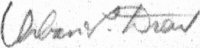 Maj Urban L Drew USAF Our estimated value of this signature : £40 Died : 2013 | Maj Urban L Drew USAF Urban 'Ben' Drew was born in Detroit, Michigan in 1924. Three months after the attack on Pearl Harbor, at the age of eighteen, Drew joined the USAAF and commenced pilot training. He earned his wings and a commission at Mariana, Florida in October 1943. He remained in the States honing his flying skills as an instructor pilot for the North American P-51 Mustang at Bartow, Florida. In May of 1944 he received his first overseas combat assignment, sailing to England on the Queen Elizabeth. He was assigned to the 375th Fighter Squadron 'Yellowjackets' of the 361st Fighter Group based in at Bottisham in Cambridgeshire. Later his squadron would be relocated to Little Walden in Essex. During his combat tour Drew would fly a total of seventy-five combat missions, rising to command of X Flight and later to command of the 375th squadron. Drew would be officially credited with six aerial victories during his combat tour. Notable was his downing of two Me-262 jets on October 7, 1944. He was the first fighter pilot to down two of the German jets, and he received the Air Force Cross for this achievement. Also of note was the ace's destruction of the largest aircraft to fly in WW 11, the BV-238, which he destroyed in a strafing pass with two wingman on Lake Schaal on September 18, 1944. Following his successful combat tour, Drew returned to the States where he again served as a flight instructor. In 1945 he was assigned to the 412 th Fighter Squadron of the 414 th Fighter Group based at lwo Jima flying the P-47 Jug. Drew's final victory tally included 6 confirmed aerial victories, 1 damaged, and 1 additional aircraft destroyed on the ground. In addition to the Air Force Cross, Drew was awarded two Distinguished Flying Crosses and 14 Air Medals. Following the War Drew helped organize the 127 th Fighter Group of the Michigan National Guard. He became Deputy Group Commander and later was appointed the first Air Adjutant General of the State of Michigan. After his retirement from the Air Force with the rank of Major, he established an aviation business in Britain and South Africa. He currently resides in Southern California, and remains active in matters involving the American Fighter Aces Association. Sadly we have learned that Ben Drew passed away on 3rd April 2013. |
  Major Richard Bud Peterson Our estimated value of this signature : £55 Died : 2000 | Major Richard Bud Peterson Bud Peterson was born in Hancock in 1923 and attended the University of Minnesota before joining the Army Reserve. He went through the cadet program and became a second lieutenant. He was sent to Europe to join the 357th Fighter Group. He scored his first victory in March 1944, bringing down an Fw190 in his P-51 Mustang. He eventually became the top scorer in 364th Fighter Squadron, with a final tally of 15.5 victories, and was the 10th Ace of the 357th Fighter Group. All his victories were scored in the P-51 Mustang, and he also scored 3.5 ground victories, and has the distinction of scoring victories over every piston-engined Luftwaffe aircraft flown in WWII. Peterson flew 150 missions over Europe. Major Richard Bud Peterson became a major at age 21, at the time the youngest person to achieve that rank in the Army Air Force. He would later be awarded the Air Medal, the Silver Star and the Distinguished Flying Cross. Major Richard Bud Peterson also received the Croix de Guerre, one of France's highest honors for bravery. After the war he was selected as a staff officer to interview Adolf Galland, commander of the German Air Force fighter forces, on aerial combat tactics and strategy. He later pursued his architecture career and worked for such companies as Cerny Associates Inc. before co-founding Peterson, Clark & Griffith, Architects, in 1960. He was involved in the construction of many Twin Cities buildings and the Minnesota Zoo. Bud Peterson, died Sunday 4th of June 2000 of cancer at a Walker Methodist home in Minneapolis. He was 77. |
| Mustang Squadron details |
375th Fighter Squadron Country : US | 375th Fighter Squadron |
487th Fighter Squadron Country : US | 487th Fighter Squadron |
No.64 Sqn RAF Country : UK Disbanded 16th June 1967 Known Codes : , SH, GR, XQ, | No.64 Sqn RAF Tenax proposite - Firmness of purpose |
|
Contact Details |
|
Sign Up To Our Newsletter!
This website is owned by Cranston Fine Arts. Torwood House, Torwoodhill Road, Rhu, Helensburgh, Scotland, G848LE Contact: Tel: (+44) (0) 1436 820269. Email: cranstonorders -at- outlook.com
|
|
|


