|
|
|
|
|
 |
|
|
|
|
|
|
|
|
Me109 Willy Messerschmitt designed the BF109 during the early 1930s. The Bf109 was one of the first all metal monocoque construction fighters with a closed canopy and retractable undercarriage. The engine of the Me109 was a V12 aero engine which was liquid-cooled. The Bf109 first saw operational service during the Spanish Civil War and flew to the end of World War II, during which time it was the backbone of the Luftwaffe fighter squadrons. During the Battle of Britian the Bf109 was used in the role of an escort fighter, a role for which it was not designed for, and it was also used as a fighter bomber. During the last days of May 1940 Robert Stanford-Tuck, the RAF ace, got the chance to fly an Me109 which they had rebuilt after it had crash landed. Stanford-Tuck found out that the Me109 was a wonderful little plane, it was slightly faster than the Spitfire, but lacked the Spitfire manoeuvrability. By testing the Me109, Tuck could put himself inside the Me109 when fighting them, knowing its weak and strong points. With the introduction of the improved Bf109F in the spring of 1941, the type again proved to be an effective fighter during the invasion of Yugoslavia and during the Battle of Crete and the invasion of Russia and it was used during the Siege of the Mediteranean island of Malta. The Bf109 was the main fighter for the Luftwaffe until 1942 when the Fw190 entered service and shared this position, and was partially replaced in Western Europe, but the Me109 continued to serve on the Eastern Front and during the defence of the Reich against the allied bombers. It was also used to good effect in the Mediterranean and North Africa in support of The Africa Korps. The Me109 was also supplied to several German allies, including Finland, Hungary, Romania, Bulgaria, Croatia, and Slovakia. The Bf109 scored more kills than any other fighter of any country during the war and was built in greater numbers with a total of over 31,000 aircraft being built. The Bf109 was flown by the three top German aces of the war war. Erich Hartmann with 352 victories, Gerhard Barkhorn with 301 victories and Gunther Rall with 275 kills. Bf109 pilots were credited with the destruction of 100 or more enemy aircraft. Thirteen Luftwaffe Aces scored more than 200 kills. Altogether this group of pilots were credited with a total of nearly 15,000 kills, of which the Messerschmitt Bf109 was credited with over 10,000 of these victories. The Bf109 was the most produced warplane during World War II, with 30,573 examples built during the war, and the most produced fighter aircraft in history, with a total of 33,984 units produced up to April 1945. Bf109s remained in foreign service for many years after World War II. The Swiss used their Bf109Gs well into the 1950s. The Finnish Air Force did not retire their Bf109Gs until March 1954. Romania used its Bf109s until 1955. The Spanish Hispanos flew even longer. Some were still in service in the late 1960s. |
| Navigation | |
| Page 1 of 2 | Page 1 .. Next |
| David Pentland Me109 Aviation Art Prints, Paintings and Drawings Aviation Art |
|
|
|
|
|
|
|
|
|
|
|
|
|
|
|
|
|
|
|
|
|
| Text for the above items : |
The Last Eagle, Innsbruck, Austria, May 1945 by David Pentland. Abandoned Me 109G-10, 3rd Staffel JG4. |
A Nimble Foe by David Pentland. Krasnowardeist, Russia, 21st September 1941. Oblt. Hans-Ekkehard Bob claimed his 36th victory over a Soviet Polikarpov I-153 as the German forces surged towards Leningrad. Although an obsolete design, the I-153 was a very manoeuvrable and potentially deadly foe. |
New Enemy by David Pentland. Kedainiai, Lithuania, 23rd June 1941. Taking part in the opening days of Operation Barbarossa, Hans-Ekkehard Bob recorded his first victory in Russian airspace - a Tupolev SB-2 twin-engined bomber. During this combat action his Me 109F2 was hit by return fire, resulting in a forced landing behind enemy lines. He evaded capture and returned to his unit 2 days later. This was his 22nd victory. |
Messerschmitt versus Messerschmitt by David Pentland. Belgrade, Yugoslavia, 6th April 1941. While escorting Stukas at the start of the German Balkan campaign, the Me109Es of JG54 were engaged by Me109Es of the Yugoslav air force. During the ensuing melee, ObLt. Hans-Ekkehard Bob claimed his 20th victory. |
Taran over the Kuban by David Pentland. Crimea, 7th August 1943. While flying a late afternoon combat patrol with Otto Fonnekolds schwarm, from 5 staffel, JG52, Willi Batz witnessed a taran or ramming attack by a soviet fighter on a Luftwaffe Fw189 artillery spotter. Then a second Spitfire, which Batz mistook for an Aircobra attempted to finish off the crew which had just bailed out. At this point Batz was able to intervene and opened fire on the Spitfire forcing the Russian to take to his own parachute. This was to be his 12th victory, his final tally would be 237. Unfortunately for the German crew they were all captured on landing. |
No Escape by David Pentland. Bf109 G2 of Major Gunther Rall pursues and downs an unidentified Soviet aircraft over the Caucasus, Russia, early Autumn 1943. Rall went on to become the third highest scoring ace of all time, with 275 victories in only 621 missions. |
The Frozen North, Petsamo, Finland, January 1943 by David Pentland. Walter Schuck and fellow pilot of JG5 Eismeer in front of a Me109F covered in tarpaulins as some protection against the weather in this most isolated and inhospitable theatre of the war. Schuck served with this unit from December 1942 to April 1945, and in that time claimed 198 victories. |
Above the Cauldron by David Pentland. Borisov, Russia, 2nd July 1941. The battle for Minsk lasted 12 days, when it ended 300,000 soviet troops had been taken prisoner. In the air fierce battles were fought to smash an escape route to the citys defenders. It was during this chaos that Gerd Barkhorn scored his first victory against a Soviet DB-3 bomber. He had flown 120 missions throughout the Battle of Britain, and only succeeded in being shot down himself. It was only in Russia that his career really took off. By the end of the war he was credited with 301 victories in 1104 missions. |
Stabsschwarm by David Pentland. Etaples, Northern France, 13th October 1941. Me109F-4s of Stabsschwarm JG2, flown by Geschwaderkommodore Major Walter Oesau, Oberleutnant Erich Leie, Oberleutnant Rudolf Rudi Pflanz, and Gefreiter Gunther Hupatz Seeger. Each was a notable ace in his own right but together they were a formidable combination. On this sortie alone they accounted for 5 RAF Spitfires. |
The Count by David Pentland. (P) Leutnant Walter Count Punski Krupinski of 4 Staffel, JG52 downs a Soviet R5 biplane on 25th September 1942. By the end of the day, 4 enemy aircraft would fall prey to his guns. One month later he received the Ritterkreutz having claimed 56 victories. |
Eagle in the Snow, Petsamo, Finland, January 1943 by David Pentland. Walter Schuck of JG5 Eismeer prepares to take off on patrol in his Me109F. Schuck served with this unit from December 1942 to April 1945, and in that time claimed 198 victories. |
Assi and Julius by David Pentland. Tournai, France, 19th May 1940. While on an escort mission for He111s, the Me109Es of 4 Staffel JG2 were engaged by the RAF Hurricanes of 87 Squadron. In the ensuing battle Staffelkapitan Hans Assi Hahn and his trusty wingman Julius Meimberg claimed a Hurricane each. |
Victory Flypast by David Pentland. (P) Erich Hartmann celebrates his 300th victory over Warzyn airfield, Poland, 24th August 1944. Oberleutnant Erich Hartmann celebrates his 300th victory over JG52's 9th Staffel home field. Four days later he was awarded the Knights cross with diamonds as the first pilot to achieve this score. |
Breaking the Ring by David Pentland. Cape Malyj-Korabelnye, Russia, 18th August 1943. While escorting Fw190s to attack Soviet shipping, ObLt. Schuck's flight of Me109G2s from 8./JG5 attacked the four Soviet Hurricanes of 78 IAP/VVS which were on patrol over the boats. The Soviet formation leader, Mladshiy Leytenant Valeriy Kiritshenko, ordered his men to form a defensive Lufbery circle but this proved inadequate protection against Schucks determined attack. Breaking into the Ring he first downed Kitshenko, and then pursued and shot down a second Hurricane. |
The Last Patrol by David Pentland. A pair of ME109 G-14s of 9th Staffel, Jagdgeswader 54 (Greenheart Wing) make a final sortie during the last days of March 1945. |
Kannonenboot by David Pentland. Adriatic coast, Greece, 20th Dece,ber 1943. 20mm cannon armed Messerschmitt 109G-6/R6 trop, flown by Oberleutnant Josef-Emil Clade, Staffelkapitan 7/JG27 White 9 and his wingman White 7. |
Jagers by David Pentland. Zhitomir, Russia, February 1943. On 6th January 1943, Gefreiter Hugo Broch was posted to II./JG54 on the eastern front, and assigned to 6./JG54. His first combat experiences were as Kaczmarek (wingman) to Horst Adameit (166 victories) and Heinrich Bazi Sterr (130 victories) flying cannon-armed Me109G-2s against both Soviet air and ground targets. |
Bomber's Bane by David Pentland. Ostrov, Latvia, 6th July 1941. Tasked with supporting the advancing German ground forces through Latvia, the fighters of 9th Staffel JG54 were kept busy keeping the Red Airforce at bay. On this occasion Oblt. Hans-Ekkehard Bob, downed 3 Tupolev SB-2 bombers during a single sortie. His 27th, 28th and 29th victories. |
Ikarus Downed by David Pentland. Belgrade, Yugoslavia, 9th April 1941. An afternoon raid by III/Jg54 developed into a massive dogfight between the Greenhearts Me109Es and a squadron of Hurricanes and Ik3s. At the conclusion of the dogfight the Lufftwaffe had downed 3 aircraft, for the loss of 2 of their own. Oblt. Hans-Ekkehard Bob, claimed one of the indigenous Ik3 Ikarus fighters as his 21st victory. |
Hand of Fate by David Pentland. South of Alexandria, Egypt, 7th August 1942. When a pair of Me109Fs from JG27 unexpectedly encountered a lumbering Bristol Bombay and downed it, they were unaware of the full significance of their action. It was only on their return to base that Emil Clade and Bernd Schneider heard that Lt. General Strafer Gott the formidable new commander of the 8th Army had perished on the fallen transport. His death opened the way for his replacement, General Montgomery. |
First Combat by David Pentland. Franco-German border, 22md November 1939. While flying a routine border Frei Jagd for some reconnaissance Dorniers, eight Me109s of 3./JG2 were engaged by fourteen French Curtiss Hawks of GC II/4. During the ensuing dogfight, the first combat for the Richthofen Geschwader since WW1, two of the French fighters were shot down. The first by Lt Helmut Wick, was flown by the French ace Adjutant Camille Plubeau (14 victories) the other by Ofw Erwin Kley. Wick was to go on to become one of the great aces of the Battle of Britain, achieving 56 victories before his death in November 1940. |
| Me109 Pilot and aircrew signature details |
  Major Hans-Ekkehard Bob Our estimated value of this signature : £50 Died : 2013 | Major Hans-Ekkehard Bob After success in the Battle of Britain, Hans-Ekkehard Bob took over leadership of 9./JG54 in 1940. The following year he was awarded the Knights Cross. Transferring to the Eastern Front his victories rose steadily to 50 by September 1942. His Group later transferred back to the West for a short period, where in April 1943, he rammed a B-17 Fortress. Returning to the Eastern Front as Kommander of IV./JG3, he ended the war as Adjutant of Gallands JV44 in the West. In his 700 missions he scored 60 victories. |
  Adolf Dickfeld Our estimated value of this signature : £55 Died : 2009 | Adolf Dickfeld A highly successful Ace, Adolf Dickfeld was posted to Russia with III/JG52 in 1941. He was one of the first pilots to score 100 victories. Later with JG2 in North Africa, and JG11 in Defence of the Reich, bringing his total to 136 victories. He was awarded the Knights Cross. Sadly, Adolf Dickfeld died 17th May 2009. |
  General Adolf Galland Our estimated value of this signature : £80 Died : 1996 | General Adolf Galland Adolf Galland fought in the great Battles of Poland, France and Britain, leading the famous JG26 Abbeville Boys. He flew in combat against the RAFs best including Douglas Bader, Bob Stanford Tuck and Johnnie Johnson. In 1941, at the age of 29, he was promoted to Inspector of the Fighter Arm. In 1942 Hitler personally selected Galland to organise the fighter escort for the Channel Dash. He became the youngest General in the German High Command but open disagreements with Goering led to his dismissal at the end of 1944. He reverted to combat flying, forming the famous JV44 wing flying the Me262 jet fighter, and was the only General in history to lead a squadron into battle. With 104 victories, all in the West, Adolf Galland received the Knights Cross with Oak Leaves, Swords and Diamonds. Born 19th March 1912, died 9th February 1996. Born in 1911, Adolf Galland learned to fly at a state-sponsored flying club in the early 1930s. In 1933 he was selected to go to Italy for secret pilot training. Galland flew for a brief time as a commercial airline pilot prior to joining the clandestine Luftwaffe as a Second Lieutenant. In April of 1935 he was assigned to JG-2, the Richtofen Fighter Wing, and in 1937 he joined the ranks of the Condor Legion flying the He-51 biplane fighter in support of General Franco during the Spanish Civil War. Despite flying 280 missions, Galland attained no aerial victories, a rather inauspicious start for a pilot would go on to attain more than 100 aerial victories - the highest for any pilot who flew on the Western Front. During Germanys invasion of Poland, Galland was assigned to an attack squadron and he flew over fifty ground sorties. He was promoted to Captain for his efforts, but Galland was anxious to return to a fighter squadron, and he got his wish in October of 1939 when he was transferred to JG-27. It was with JG-27 that Galland first learned to fly the Bf-109. In May of 1940 JG-27 flew in support of the invasion of Belgium, and Galland achieved his first combat victory on May 12. Two months later his score had risen to more than a dozen, and at this time he was once again transferred to JG-26 situated on the Channel Coast. Engaging the RAF on a daily basis during the Battle of Britain, Gallands score rose steadily until it exceeded 40 victories by September. After a short leave Galland rejoined JG-26 in Brittany, where the squadron played a defensive role. Following Germanys invasion of Russia in June of 1941, JG-26 became one of only two German fighter squadrons left on the Channel Coast. This resulted in plenty of flying, and by late in 1941 Gallands victory totals had reached 70. Following a near brush with death when the fuel tank of his 109 exploded, Galland was grounded for a time, and sent to Berlin where he was made the General of the Fighter Arm, reporting directly to Goring and Hitler. Galland spent most of the next few years carrying out inspection tours, and was at odds with his superiors about the need for an adequate fighter defense to negate ever-increasing Allied bombing of Germanys cities. He continued to fly combat missions when the opportunity presented itself, despite Gorings orders to the contrary. In January of 1945 almost 300 fighters were lost in an all-out attack on Allied airfields in France, a mission Galland did not support. He was dismissed as General of the Fighter Arm for his insubordination, but reflecting his flying abilities Hitler ordered Galland to organize JV-44, Germanys first jet-equipped fighter squadron. By March of 1945 Galland had recruited 45 of Germanys best surviving fighter pilots, and this new squadron was given the difficult task of trying to counter the daily onslaught of 15th Air Force bombers coming at Germany from the South. Gallands final mission of the War occurred on April 26 when he attained his 102nd and 103rd confirmed aerial victories prior to crash landing his damaged Me262. Several days later the War was over for both Galland and Germany. General Galland died in 1996. |
  Oberst Erich Hartmann Our estimated value of this signature : £95 Died : 1993 | Oberst Erich Hartmann Erich Hartmann started his career as Paule Rossmans wingman, and it was obvious that here was a very special pilot. Promoted Staffelkapitan of 7/JG52 in July 1943, he was shot down and taken prisoner for four hours before escaping. In September he took over 9/JG52. In March 1944 he reached the 200 victory mark. He later le 4/JG52, then briefly I/JG52, and lastly Gruppenkommandeur of I/JG52. Hartmann scored a total of 352 victories, more than any other pilot in history, and was awarded the Knights Cross with Oak Leaves, Swords and Diamonds. Erich Hartmann is the top-scoring fighter pilot in history. During WWII he shot down the equivalent of almost 15 Allied squadrons in aerial combat. In some 850 aerial combats he shot down 352 Allied planes and was shot down himself 16 times. He was never wounded. Hartmanns mother taught him to fly at age 14 and in 1942 at age 20 he was flying Me109s on the Eastern front. His first combat mission was disastrous. He spoiled his leaders attack by going for the kill himself, then mistook his leaders Me109 for a Russian fighter and fled in panic. Were it not for super ace Walter Krupinski believing in Hartmanns abilities he might well have had his flying career ended. Krupinskis tutoring coupled with the fact that Hartmann was a crack shot, turned him around. He scored his first victory on November 5th 1942 and by September 1943 he had completed 300 missions with 95 victories to his credit. In August 1944 Hartmann was awarded the Diamonds to his Knights Cross - Germanys highest decoration and one that was awarded to only 27 German militar ypersonnel. Hitler made the award personally. Before the award ceremony he was demanded to hand over his sidearm before meeting with Hitler. Hartmann told the generals that if Hitler could not trust his front line officers, he could stuff his Diamonds. After a brief confusion he was allowed to carry his pistol. Hartmanns success resulted from the lessons he learned from Krupinski - do not fire until your enemys plane fills your windscreen. That resulted in a sure kill with a minimum amount of ammunition expended. Almost every kill Hartmann made was a near collision. After the war Hartmann surrendered to the Americans, who turned him over to the Russians. He was singled out for especially brutal treatment and was illegally held by the Russians until 1955 when Chansellor Adenaur personally visited Moscow and arranged for his release. The Russians had used every persuasive device known to convert Hartmann to Communism and get him to join the DDR airforce. Upon his return to Germany, his friend and fellow ace, Walter Krupinski, urged him to join the new German Air Force with other old friends such as Barkhorn and Hrabak. Since he felt he was too old to begin a new career, he did. He was given refresher training in the United States and was selected to command the Richthofen Wing in the new German Air Force, the first fighter wing to be rebuilt since the war. He filled that and other jobs in the new Luftwaffe with great distinction until his retirement. He died 20th September 1993. |
  Dieter Hrabak Our estimated value of this signature : £60 Died : 1995 | Dieter Hrabak Dieter Hrabak was shot down in his first aerial combat during the Polish Campaign. He survived to become one of the Luftwaffes most respected and popular leaders. He scored his first victory in the Battle of France, and got 15 more during the Battle of Britain. By Eagle Day he was in command of II./JG 54, which he led until taking command of JG 52 in 1942. He was the first JG 54 Ace to be awarded the Knights Cross. He ended the war back in command of JG 54, and was credited with 125 victories. Dieter Hrabak was born on 19th December 1914 in a small village near Leipzig. Upon graduation from high school, he hoped to become a commercial pilot, but in 1934 Hrabak joined the Reichsmarine. Within 6 months he transferred to the newly formed Luftwaffe for flight training. By April 1939, Hrabak was recognised as an experienced pilot and given command of a squadron in Vienna. On his very first combat mission in September 1939 over Poland, he was shot down - the first of 11 times. Hrabaks first aerial victory came during the Battle of France. Flying an Me109, he claimed five more victories before the armistice. In the summer of 1940, his squadron was incorporated into a newly formed fighting wing, JG54 Green Hearts. Hrabak commanded II./JG54, one of the wings three groups as the Luftwaffe began its assault on England. During the Batttle of Britain he brought his score to 16 Royal Air Force fighters and Field Marshal Goring personally decorated him with the Knights Cross. In the spring of 1941, II./JG54 flew in the short campaign against Yugoslavia. When Operation Barbarosa began in Russia, he flew on the northern sector of the front and fought over Leningrad. In November 1942, Hrabak took command of JG52 on the southern front and fought over Stalingrad. In August 1943, he got his 100th aerial victory and in November, Hitler awarded him Oak Leaves to the Knights Cross. In early 1944, JG52 achieved its 10,000th aerial victory - the most by any Luftwaffe wing. In October 1944, he returned to his old wing, the Green Hearts, as Commander. Flying the Focke Wulf Fw190, he fought until near the end of the war in Kurland. After the war, he worked in the auto and chemical industry. He was a key architect in rebuilding the modern German Air Force. In 1953, Chancellor Adenaur asked him to help form a new German Air Force. Hrabak personally interviewed most of the officers who would form the nucleus. In mid-1955, he came to the United States and trained on modern jets. In the summer of 1956, he returned home to command the Advanced Pilot Training Centre at Furstenfeldbruck AB. By 1960, he commanded all GAF flying training centres. Two years later, he took charge of the air defence sector covering northern Germany and the Netherlands. In 1964, he was named NATOs Chief of Air Defence, Central Europe, until he became special manager for the Lockheed F-104 Starfighter. Finally, as a major general, he commanded the GAFs tactical command, retiring on 1st October 1970. He died on 15th September 1995. |
 Colonel Herbert Ihlefeld Our estimated value of this signature : £65 Died : 1995 | Colonel Herbert Ihlefeld Born 1st June 1914 in Pinnow Pommern and died 8th August 1995 in Wenningen lower Saxony. Joined the Luftwaffe in 1936 and scored nine victories during the Spanish Civil War. Flew 1000 combat missions and claimed 132 enemy aircraft with 56 on the Western Front including 26 spitfires and 67 on the Russian Front. Participated in the air war over Poland, France and the Battle of Britain. In 1941 Ihlefeld was transferred to the Balkans for the invasion of Yugoslavia. He was shot down by AA fire and captured by the Yugoslavian Army. 8 days lated he was rescued by the German troops. Ihlefeld participated in the assault on Crete, claiming his 36th kill, a Hurricane. He then commanded Jagdgeschwader 77 in time for Operation Barbarossa in June 1941. In April 1942 Ihlefeld became the 5th pilot to reach 100 victories and his unit 1/JG77 was credited with 323 enemy aircraft kills compared to the loss of only 17 Bf109s. Ihlefeld then took command of Jagdgeschwader 52 in June 1942 but he was involved in a landing accident and badly injured and was not ready to return to active service until July 1943. In May 1944 he commanded JG11 and then JG1 during the defence of the Reich. In 1945 he took command of Jagdgeschwader 1 equipped with the Heinkel 162. |
  General Walter Krupinski Our estimated value of this signature : £75 Died : 2000 | General Walter Krupinski Walter Krupinski first saw combat against the RAF on the Western Front. Transferring to the east, he became a Squadron Commander in the legendary JG52. In 1943 his victories reached 150 but, in March 1944 with 177 victories to his name, he was transferred to Germany to command JG11. Flying high altitude Me109s, he chalked up another 12 victories before being wounded. In September 1944 he was promoted Kommandeur of III./JG26 and led them on Operation Bodenplatte before joining Galland's famous JV44. He completed the war with 197 victories in over 1100 missions. Walter Krupinski, known as Graf Punski or Count Punski in the Jagdwaffe, was a swashbuckling fly-boy with a phenomenal record of 197 aerial victories. Krupinski not only never lost a wingman, but also had the ability to help beginners develop to their full potential. He joined the Luftwaffe in 1939 as a student in the 11th Flying Training Regiment. He first served with the Jagderganzungsgruppe JG52, a combat replacement unit, flying the Me109, in October 1940. By the end of 191, he had earned the Iron Cross 1st class after his seventh victory and was awarded the German Cross in Gold and the Knights Cross one year later after scoring over 52 aerial victories. Krupinski taught the aerial art of closing with the enemy aircraft until it filled the windscreen before firing. It was during this time that the young Erich Hartmann was assigned as Krupinskis wingman. The young and overly enthusiastic Hartmann was seriously struggling in his first attempts at aerial combat, resulting in severe reprimands by the group commander. However, under Krupinskis expert tutelage, Hartmann mastered the art of aerial combat and went on to become the top scoring fighter ace in the world with 352 victories. While still a first lieutenant, Krupinski was selected as Dquadron Commander of 7.JG52 in the spring of 1943. On 5th of July of the same year, he scored victories 80 to 90 - 11 in one day! He later transferred to the Reich Defence in the west with 1./JG5 in the spring of 1944. His units mission was to help halt the Allied strategic bombardment campaign against Germany. Krupinski continued to rack up aerial victories and was awarded Oak Leaves to the Knights Cross after his 177th victory. He was promoted to Captain and became Group Commander of II./JG 11. Later, Krupinski became Group Commander of II./JG 26 Schlageter Group. In March 1945 he joined General Adolf Gallands famed Jagdverband 44 and flew Messerschmitt Me262 jet fighters until the end of the war. After logging a total of 1,100 combat missions, Krupinski was officialy credited with 197 aerial victories. Krupinski was also wounded seven times in aerial combat and received the Verwundetenabzeichen in Gold - the German equivalent of the American Purple Heart. A civilian after the war, Krupinski later joined the new Luftwaffe in 1952 and was promoted to major in 1955. He received jet fighting training from the Royal Air Force and became the first commander of the Jagdbomber Geschwader, Fighter-Bomber Wing - 33. Krupinski flew various jet fighters in the German Air Force, but held dear the last aircraft he flew until his retirement, his beloved F-104G Starfighter. General Krupinski retired as Commander of the German Air Force Tactical Air Command in 1976. He received the Knight's Cross with Oak Leaves. He died 7th October 2000. |
  Feldwebel Heinz Radlauer Our estimated value of this signature : £45 | Feldwebel Heinz Radlauer Heinz Radlauer learnt to fly gliders in 1940, aged 17, and joined the Luftwaffe in August 1941. After Fighter School, in June 1944 he was posted to join JG51 Molders then fighting on the Eastern Front near Minsk, scoring his first victory in October of that year. Heinz Radlauer fleew the Bf109G, the Fw190A, and at the end of the war the Fw190D, by which time he had notched up over 100 combat missions, flying his last combat mission on 30th April 1945. Credited with 15 air victories, all on the Eastern Front, he was awarded the Iron Cross 1st and 2nd Class. |
  General Gunther Rall Our estimated value of this signature : £75 Died : 2009 | General Gunther Rall A young pilot with III/JG52 at the outbreak of war. He quickly demonstrated his natural ability and leadership qualities, scoring his first air victory early in the Battle of Britain, and by July 1940 was leading 8/JG52. After transfer to the Eastern Front his air victories mounted at an astonishing rate. A crash hospitalised him but within nine months he was back in the cockpit, and, when commanding III/JG52, gained the Wings 500th victory. Gunther fought throughout the war to become the 3rd highest Ace in history with 275 victories. He was awarded the Knights Cross with Oak Leaves and Swords. Gunther Rall was born on March 10, 1918 in the small Bavarian town of Gaggenau, Baden. Immersing himself in Boy Scout activities during the difficult economic times in Germany following WW 1, Rall finished school in 1936 and joined the German Army. Influenced by a friend, who was a young officer in the Luftwaffe, Rall entered pilots school in 1938. His initial posting was with JG52. He attained his first aerial victory during the Battle of France in May of 1940. During the Battle of Britain JG52 absorbed many casualties, and Rall was promoted to Squadron Commander at the young age of 22. With his fair-hair and smooth complexion the young officer looked even younger than his years. But behind this pleasant exterior was a fierce competitor with the heart of a tiger. Later, Ralls squadron would support the attack on Crete, followed by deployment to the Southern Sector on the Eastern Front. Ralls victory totals began to mount. Following his 37 th victory, GiInther was himself shot down. He was lucky to survive the crash, but with a badly broken back he would spend most of the next year in various hospitals. In Vienna at the University Hospital he would meet his future wife, Hertha. Miraculously, Rall recovered and returned to the Luftwaffe in August of 1942. By November his score exceeded 100 and he was awarded the Oak Leaves to accompany the Knights Cross he was awarded only weeks earlier. As the War progressed against Russia, Rall began to encounter ever more experienced Soviet pilots flying better performing aircraft. Despite this fact, and being shot down several more times himself, Ralls victory tally kept rising. By March of 1944 the ace had attained 273 aerial victories. With the War now going badly for Germany, Rall was transferred to the Western Front. He was able to attain only two more victories against the swarms of Allied bombers and fighter escorts which now pounded Germany every day and night. In May of 1944 Rall was shot down by a P-47. Losing his thumb in the battle he remained out of combat until later in 1944. Ralls final assignments included flying 190Ds as Kornmodore of JG300, and flying the Me-262 jet. Ralls 275 aerial victories (attained on less than 700 combat sorties) make him the third highest scoring ace of all time. If not for the down time suffered as a result of his broken back, Rall might have actually equaled or exceeded Erich Hartmanns alltime record of 352 aerial victories. Rall was not much for socializing during the War. He was a fierce competitor with a businessmans attitude about flying. He was an excellent marksman, and possibly the best deflection shot expert of the War. He continued to fly with the Bundeslufwaffe following the War, serving as its Commander-In Chief in 1970-74. Sadly Gunther Rall died on 4th October 2009. |
  Oberfeldwebel Willi Reschke Our estimated value of this signature : £40 Died : 2017 | Oberfeldwebel Willi Reschke One of the outstanding younger Luftwaffe pilots, Willi Reschke was one of the leading members of JG300 Wilde Sau flying the Fw190A in the 'Defence of the Reich'. Towards the latter months of the war he transferred to the Stabsschwarm of JG301, still flying the Fw190A. Awarded the Knight's Crossin April 1945, he was credited with 26 victories - all in the west - including 18 four engined bombers. He died on 5th July 2017. |
  Oberleutnant Walter Schuck Our estimated value of this signature : £70 Died : 2015 | Oberleutnant Walter Schuck Initially with JG3, Walter Schuck was posted north to 7./JG5 in April 1942. On 15 June 1944 he chalked up his 100th victory during a day when he shot down 6 aircraft. Two days later he had his most successful day, achieving 12 victories in twenty-four hours, a feat never surpassed in JG5. On 1 August, he assumed command of 10./JG5. Walter Schuck transferred to fly the Me262 as Staffelkapitan of 3./JG7, and achieved 8 further victories flying the new jet. His final tally was 206 air victories. He was awarded the Knights Cross with Oak Leaves. Walter Schuck died on 27th March 2015. |
  Oberleutnant Gunther Seeger Our estimated value of this signature : £50 Died : 2013 | Oberleutnant Gunther Seeger In February 1940, Gunther Seeger was an Unteroffizier with 3./JG2, scoring his first victory in the early days of the Battle of Britain. he served on the Channel Front until December 1942, including several months with the Geschwaderstabsschwarm. He transferred to the Mediterranean theatre with II./JG2 before joining 6./JG53. In February 1943 he joined 7./JG53 becoming Staffelkapitan in September 1944. Awarded the Knight's Cross, Gunther Seeger scored 56 victories. |
 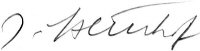 General Johannes Steinhoff Our estimated value of this signature : £80 Died : 1994 | General Johannes Steinhoff By early 1940 Macky Steinhoff was leading 4 / JG-52 during the Battle of Britain. He was then transferred to the eastern front where his success continued. In the final stages of the defence of the Reich he joined JV-44 flying the ME 262 in which he scored 6 victories before being seriously burned in a crash. He flew 939 missions scored 178 victories and was awarded the Knights Cross with Oak leaves and swords. |
  Hannes Trautloft Our estimated value of this signature : £70 Died : 1995 | Hannes Trautloft Hannes Trautloft is one of the Luftwaffe's great fighter leaders, scoring his first air victory in the Spanish Civil War in August 1936. Returning to Germany in 1937 he joined the national aerobatics team flying the Me109. Soon after the outbreak of World War II, Hannes took command of I./JG20 taking part in the Battle of Britain, before moving to the Balkans as Kommodore of JG54. Now leading the group on the Russian Front, JG54 took part in the heavy fighting, first in the Me109, then the Fw190. In the summer of 1943 Hannes Trautloft joined General Galland's staff. As a 'mutineer' he was sacked by Goering, thus ending an illustrious combat career comprising 550 combat missions and 57 aerial victories. he died 11th January 1995. |
  Walter Wolfrum Our estimated value of this signature : £60 Died : 2010 | Walter Wolfrum Walter Wolfrum first saw combat in the Crimea with 5/JG52. He was shot down three times, and wounded twice before scoring his first victory. With his score at 70 he was again wounded, but returned to take command of 1/JG52 in May 1944, taking part in the fiercely fought defence of the Ploesti oilfields. he was again wounded, but returned to command 1/JG52 until the end of the war. he had flown 423 missions, achieved 137 victories, and was awarded the Knights Cross. Sadly, Walter Wolfrum passed away on 26th August 2010. |
| Me109 Squadron details |
JG26 Country : Germany | JG26 Jagdgeschwader 26 Schlageter was a Luftwaffe fighter-wing of World War II. It operated mainly in Western Europe against Great Britain, France and the United States but also saw service against Russia. It was named after Albert Leo Schlageter, a World War I veteran and Freikorps member arrested and executed by the French for sabotage in 1923. Commanders of II. Gruppe JG 26 Hptm. Werner Palm, 1 May 1939 – 27 June 1939 Hptm Herwig Knüppel, 28 June 1939 – 19 May 1940 Hptm Karl Ebbighausen, 20 May 1940 – 31 May 1940 Hptm. Erich Noack, 1 June 1940 – 24 July 1940 Hptm Karl Ebbighausen, 25 July 1940 – 16 August 1940 Hptm Erich Bode, 17 August 1940 – 3.10.40 Hptm Walter Adolph, 4 October 1940 – 18 September 1941 Hptm Joachim Müncheberg, 19 September 1941 – 21 July 1942 Hptm Conny Meyer, 22 July 1942 – 2 January 1943 Maj Wilhelm-Ferdinand Galland, 3 January 43 – 17 August 1943 Hptm Hans Naumann, 18 August 1943 – 8 September 1943 ObLt Johannes Seifert, 9 September 1943 – 25 November 1943 Maj Wilhelm Gäth, 26 November 1943 – 1 March 1944 Hptm Hans Naumann, 2 March 1944 – 28 June 1944 Hptm Emil Lang, 29 June 1944 – 3 September 1944 Hptm Georg-Peter Eder, 4 September 1944 – 8 October 1944 Maj Anton Hackl, 9 October 1944 – 29 January 45 ObLt Waldemar Radener, 30 January 1945 – 22 February 1945 Hptm Paul Schauder, 23 February 1945 – 1 May 1945 |
JG27 Country : Germany | JG27 Jagdgeschwader 27 Afrika was a World War II Luftwaffe Geschwader. It was most famous for service in the North African Campaign, supporting the Deutsches Afrikakorps. Commanders of IV./JG 27 Hauptmann Rudolf Sinner, June 1943 Oberleutnant Dietrich Boesler (acting), September 1943 Oberleutnant Alfred Burk (acting), October 1943 Hauptmann Joachim Kirschner, 18 October 1943 Hauptmann Otto Meyer, 1 February 1943 Hauptmann Hanns-Heinz Dudeck, July 1944 Hauptmann Ernst-Wilhelm Reinert, 2 January 1945 |
JG3 Country : Germany | JG3 Jagdgeschwader 3 (JG 3) Udet was a Luftwaffe fighter-wing of World War II. The Geschwader operated on all the German fronts in the European Theatre of World War II. It was named after Ernst Udet in 1942. Commanders of IV./JG 3 Major Franz Beyer, 1. June 1943 Hauptmann Heinz Lang , 11 February 1944 Major Friedrich-Karl Müller, 26 February 1944 Hauptmann Heinz Lang , 11 April 1944 Major Wilhelm Moritz, 18 April 1944 Hauptmann Hubert-York Weydenhammer, 5 December 1944 Major Erwin Bacsila, 5 January 1945 Oberleutnant Oskar Romm, 17 February 1945 Hauptmann Gerhard Koall, 25 April 1945 Hauptmann Günther Schack, 1 Mai 1945 |
JG4 Country : Germany withdrawn after heavy losses back to the Reich in September 1944. and was disbanded on March 19, 1945. | JG4 agdgeschwader 4 (JG 4) was a Luftwaffe fighter-wing of World War II. JG 4 was formed as a full Geschwader on 15 June 1944 in Ansbach from Stab/Jagdgeschwader z.b.V. and its first Geschwaderkommodore was Major Gerhard Schöpfel. I./JG 4 was formed earlier on 7 August 1942 in Mizil, Romania from the Ölschutzstaffel/Jagdgeschwader 77, with 2./JG 4 formed 1 December 1942. Stab I, 3. and 4./JG 4 were formed on 10 January 1943 at Mizil, and the I Gruppe was now complete. II. Gruppe was formed in July 1944 at Salzwedel from I./Zerstörergeschwader 1 (ZG 1) and partially from Sturmstaffel 1. III. Gruppe was formed in July 1944 at Rotenburg from III./ZG 1. IV./JG 4 was formed on 20 October 1944 at Finsterwalde from II./Jagdgeschwader 5. I./JG 4 was assigned in early 1943 as defensive protection of the Mizil and Ploiești oil complexes in Romania. I./JG 4 first saw action in combat against the force of B-24 Liberators dispatched on the low-level attack against Ploiești on 1 August 1943, code-named Operation "Tidal Wave", claiming 12 Consolidated B-24 bombers downed. The unit saw further action over the Balkans against the United States Army Air Forces (USAAF) 15th Air Force heavy bombers flying from bases in North Africa and Italy. The unit was later deployed to the defence of Rome and northern Italy. I./JG 4 first saw action in combat against a strike force of B-24 Liberators dispatched on the celebrated low level attack against Ploiești on 1 August 1943 as Operation "Tidal Wave". Stab and I./JG 4 claimed twelve B-24 bombers shot down. JG 4 was then deployed in the German defensive campaign in Italy during the first half of 1944, prior to being shifted to the France for the Normandy invasion. Over the Lake Bracciano area on 7 May 1944, I./JG 4 encountered Spitfires of No. 72 Squadron RAF, who claimed nine Bf 109's shot down; I Gruppe lost 4 killed and 2 wounded in the action.[1] During their Italian campaign, I./JG 4 lost 40 men killed or missing, 26 wounded, and 7 taken prisoner.[2] JG 4 were then withdrawn after heavy losses back to the Reich in September 1944. and was disbanded on March 19, 1945. |
JG5 Country : Germany | JG5 Eismeer was a Luftwaffe fighter Wing that served during World War II. As the name Eismeer (Ice Sea) implies, it was created to operate in the far North of Europe, namely Norway, Scandinavia and northern parts of Finland, all nearest the Arctic Ocean. Just over two dozen fighter aircraft that once served with JG 5 during the war still survive in the 21st century, more than from any other combat wing of any of the Axis air forces of World War II. |
JG52 Country : Germany | JG52 The most successful Luftwaffe fighter-wing of World War II, with a claim total of more than 10,000 victories over enemy aircraft. It was home to the top three scoring Experten of the Luftwaffe, Erich Hartmann, Gerhard Barkhorn and Günther Rall. The unit flew the various marks of the Messerschmitt Bf 109 exclusively through the war. |
JG54 Country : Germany | JG54 I./JG 54 was initially formed as I./JG 70 near Nuremberg in July 1939, just two short months before hostilities broke out. As was to become tradition within Grunherzgeschwader, the Gruppe took the Nurember coat-of-arms (a veritcally divided shield with a black heraldic bird on the left, and red and white diagonal stripes on the right) to represent the region the unit came from. On September 15, 1939, I./JG 70 was redesignated I./JG 54 The initial unit designation for II./JG 54 was I./JG 138. This unit was raised in 1938 after the Austrian annexation. Naturally many Austrian nationals were recruited when I./JG 138 was formed. The Aspern coat of arms (black lion's head surmounting a white cross on a red field) was taken by the Gruppe for its identity. I./JG 138 was briefly designated I./JG 76 before finally becoming II./JG 54 on April 6, 1940. The III./JG 54 has its roots in Prussia. Initially I./JG 21, the members were drawn from the Jesau region in Prussia. The modified Jesau coat-of-arms (a shield with a Jesau cross with three diving aircraft on a red background, with a white outline on the shield) was adopted as the Gruppe's own. On July 15, 1939, I./JG 21 was redesignated III./JG 54. However, the bureaucratic nature of the young Luftwaffe was such that it was over a year before records would reflect the new designation. Consequently, III./JG 54 fought in Poland and France as I./JG 21. Kommodoren of JG 54 : Major Martin Mettig; 2 Feb 40 to 25 Aug 40. Oberst Hannes Trautloft; 25 Aug 40 to 5 Jul 43. Major Hubertus von Bonin; 6 Jul 43 to 15 Dec 43. Oberstleutnant Anton Mader; 28 Jan 44 to Sep 44. Oberst Dieter Hrabak; 1 Oct 44 to 8 May 45. |
|
Contact Details |
|
Sign Up To Our Newsletter!
This website is owned by Cranston Fine Arts. Torwood House, Torwoodhill Road, Rhu, Helensburgh, Scotland, G848LE Contact: Tel: (+44) (0) 1436 820269. Email: cranstonorders -at- outlook.com
|
|
|


